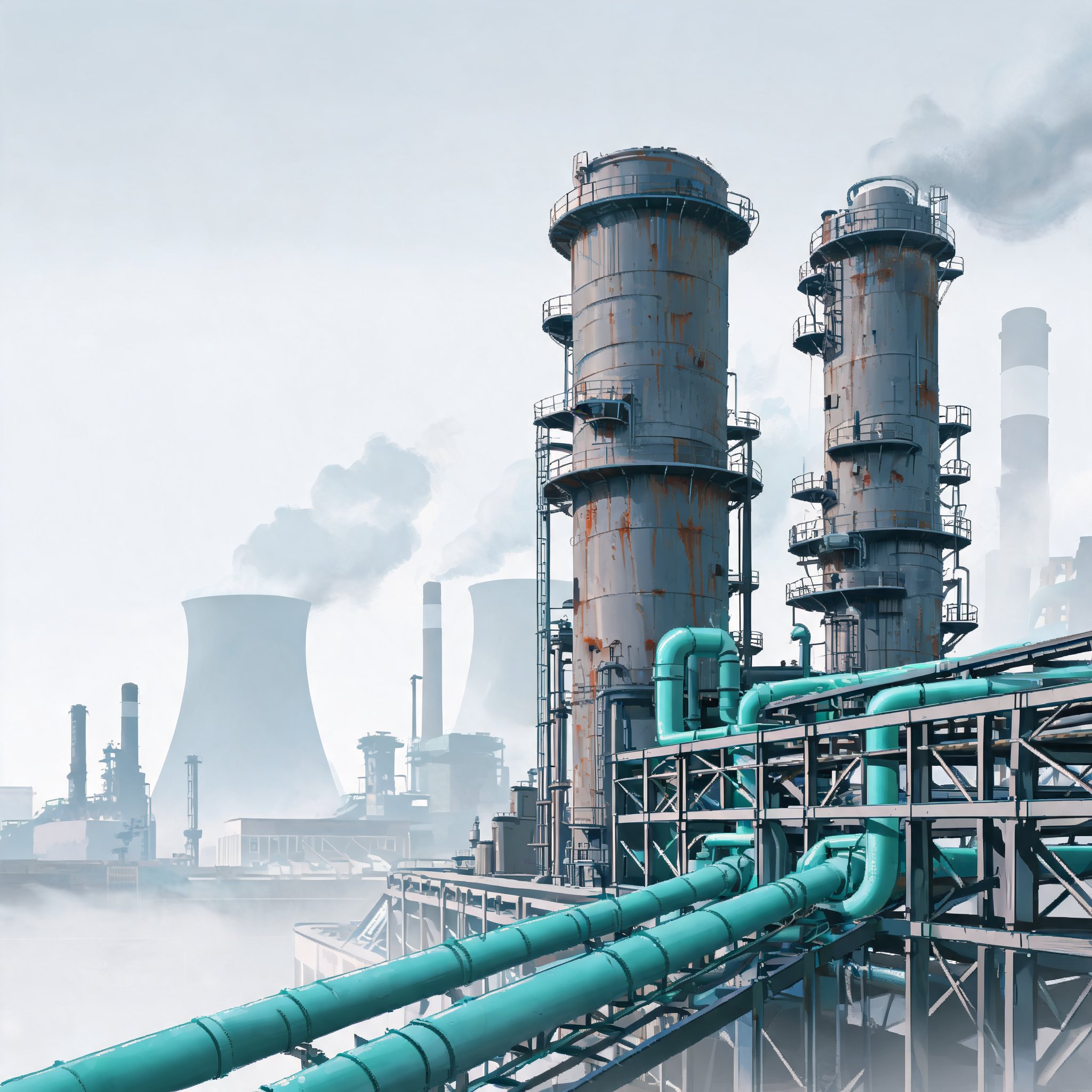
ArcelorMittal S.A., Mitsubishi Heavy Industries (MHI), BHP Group Ltd. and Mitsubishi Development Pty Ltd (MDP) have completed the first phase of a carbon capture trial at ArcelorMittal's integrated steelmaking site in Gent, Belgium, capturing more than 90% of the carbon dioxide in blast furnace gas at pilot scale.
The campaign used MHI's Advanced KM CDR Process and ran for more than 4,500 hours of operational testing, focused on a proportion of the blast furnace off-gas. According to the partners, the results provide the operational and engineering data needed to assess whether the technology can be applied at full scale at the Gent blast furnace.
What the results suggest
Assessments based on the trial indicate that applying the capture technology at full scale to the pre-combustion blast furnace off-gas could cut CO2 intensity at the Gent site by up to 24%. Extending the approach across multiple emission points in the plant could, the partners say, support progress toward near-zero emissions intensity.
The blast furnace test was intended to show technical feasibility in a demanding environment. Blast furnace off-gas carries dust, sulfur-containing compounds and other contaminants, along with significant concentrations of CO2 and carbon monoxide. Only the CO2 was captured in this phase; the remaining carbon in the form of CO can continue to be used for power and heat generation elsewhere on site, with CO2 released when that gas is combusted.
Phase 2 turns to the hot strip mill
The second phase will broaden the application across several emission points in the steelmaking process, including gases from the hot strip mill reheating furnace. That furnace is fired with gas to heat thick steel slabs to the temperature needed for rolling into thin sheets, and it runs on a blend of by-product gases — coke oven gas, blast furnace off-gas and basic oxygen furnace gas — together with natural gas. Capturing CO2 from its flue gas is a post-combustion application and will test MHI's technology under a different, more dynamic flue-gas profile.
Combining capture across multiple processes could support progress toward near-zero emissions intensity for blast furnace steelmaking, and the results are expected to inform updated engineering and deployment studies for future full-scale applications.
Roles and reactions
ArcelorMittal is hosting and facilitating the trial in Gent. MHI supplies its proprietary Advanced KM CDR Process and leads carbon capture process engineering and technical evaluation. BHP and MDP, which supply high-quality steelmaking raw materials to ArcelorMittal's European operations, are funding the work.
Frederik Van De Velde, CEO of ArcelorMittal Belgium, said the partners set out to understand how carbon capture can be incorporated into existing steel plants, and called scaling up such technologies the vital next step in decarbonization. He thanked the partners and ArcelorMittal employees and said he looked forward to first results from capture at the hot strip mill reheating furnace.
Tatsuto Nagayasu, senior vice president and head of CCUS at MHI, described 4,500-plus hours of operation and capture rates above 90% as an important milestone for applying the company's technology in steel. He said the campaign showed the Advanced KM CDR Process could operate under challenging blast furnace gas conditions, including dust, sulfur-containing compounds and other impurities, while generating data for commercial-scale design. The hot strip mill phase, he said, will deepen understanding of integrating capture across multiple emission sources.
Dr. Ben Ellis, vice president of marketing sustainability at BHP, said the results demonstrate the abatement potential of the blast furnace and integrated steelmaking route. He noted that around 70% of global steel production today comes from blast furnace steelmaking and that the route is expected to remain important for decades, making it critical to cut emissions from the process while developing alternative pathways.
Tadashi Mizuno, managing director and CEO of MDP, said the phase 1 results strengthened confidence that carbon capture on blast furnace gas could be a viable emissions-reduction pathway for steel. Energy efficiency improvements and high-quality raw materials will keep playing a role in the near to medium term, he said, while technologies such as CCUS could contribute significantly to long-term decarbonization.