ICEYE and Nokia have signed a Letter of Intent with Ukraine's Ministry of Defence to explore cooperation on sovereign satellite communications, an arrangement the companies present as a step toward communications infrastructure that Ukraine would own and control.
The document is exploratory and does not bind either company to a procurement or deployment contract. No pricing, delivery timetable or terminal volumes were disclosed alongside the announcement. The signing took place during a visit by Finland's Prime Minister to Ukraine.
Built on an earlier government partnership
The letter builds on a partnership the two companies announced earlier this month to develop broadband low Earth orbit satellite communications systems for governments.
Ukrainian President Volodymyr Zelenskyy said modern warfare had proven that reliable communications are a matter of national security, and that countries must rely on capabilities they can control. He described the letter as an important step in that direction and thanked Finland and its Prime Minister for consistent support, saying Ukraine values partners who not only help the country but work with it to build Europe's long-term security.
Three layers of control
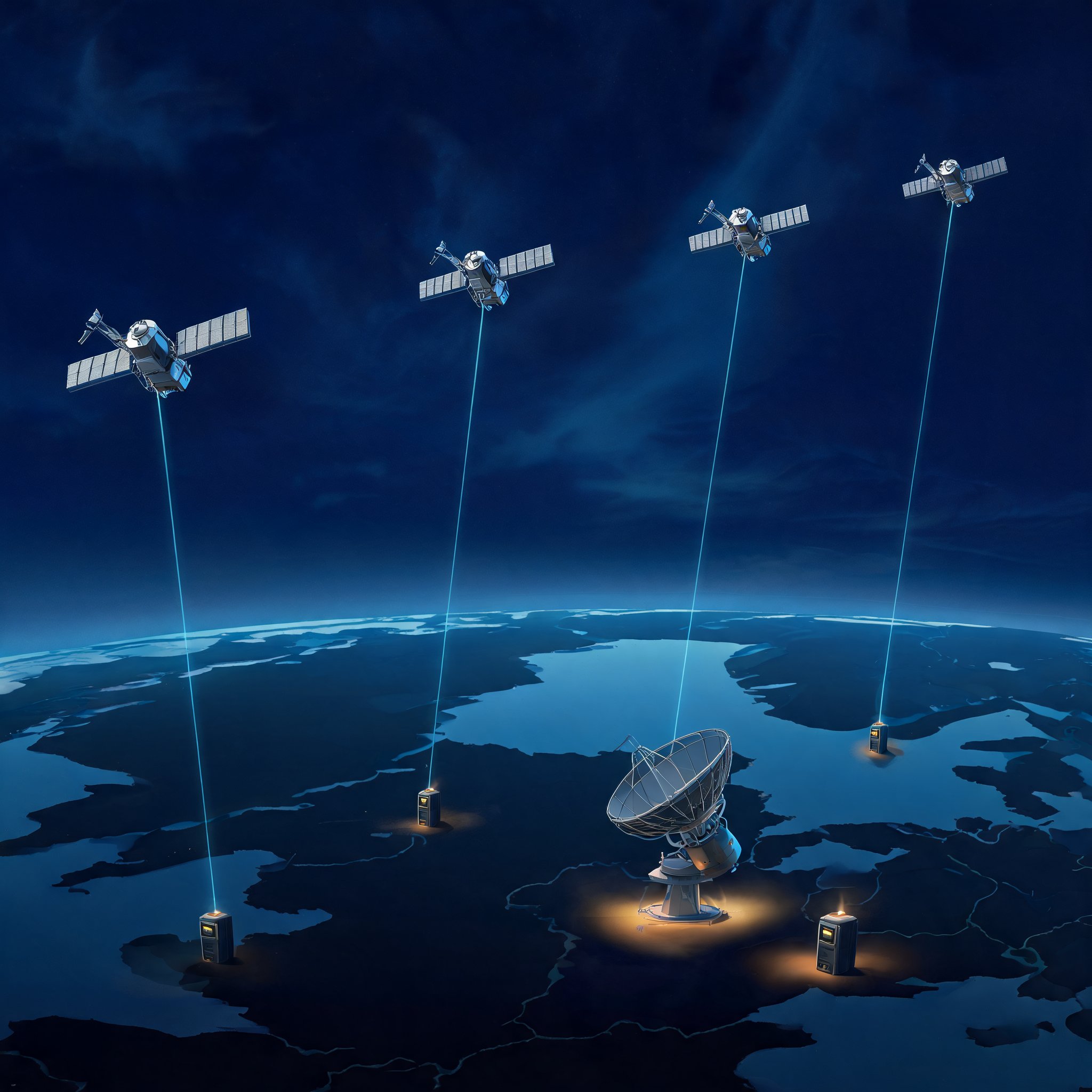
The jointly developed systems are designed to give nations ownership and control across three layers: the satellites themselves, the ground segment, and the user terminals. The companies frame this as distinct from buying capacity on a foreign-operated constellation, where a vendor sets continuity terms and can withdraw service under political pressure.
Both companies describe the architecture as built on trusted European technology, their stated answer to dependence on non-European platforms. The declared mission set covers defence work and disaster response.
Mikko Hautala, Chief Geopolitical and Government Relations Officer and Chairman of Nokia Defense, said nations need communications they can rely on in every situation, adding that satellite networks extend and protect connectivity when ground networks are disrupted. Through the letter, he said, the parties would explore how trusted, sovereign satellite communications can strengthen Ukraine's resilience and give it control over the connectivity it depends on.
LEO latency and the question of ownership
Low Earth orbit constellations fly closer to the ground than geostationary satellites, which is the engineering basis for lower-latency broadband to moving units and mobile terminals. Nokia's framing points at the difference between owning a constellation and renting capacity on one. A government that holds the ground segment and terminals controls its own continuity arrangements.
Rafal Modrzewski, CEO and co-founder of ICEYE, said Ukraine needs secure, sovereign and high-performance satellite communications systems that it controls. He said ICEYE has a track record of delivering sovereign missions at speed and has supported Ukraine since 2022, and that the company remains committed to continuing that support.
From intent to hardware
No figure was disclosed for spacecraft, ground stations or user terminals, and no schedule has been published for when a Ukrainian-controlled constellation might carry operational traffic. Turning intent into hardware would require programme funding, spectrum coordination and a trained operator cadre, work that sits outside the letter's scope, which commits the parties only to exploring cooperation.
Ukraine's defence ministry now holds an option on a sovereign satellite communications pathway it would have to fund and specify itself, with European vendors waiting on the requirement.