At 130 years old, Pleasure Beach Blackpool is known for its seaside amusement park atmosphere, wooden roller coasters, the Big One and shows. Less visible is retail's role. Damian Jackson, head of retail, describes in an interview how merchandise is selected, developed and sold. His account is the operator's own: it offers examples and rationale, not independently verified sales data.
Merchandise with a reason to exist
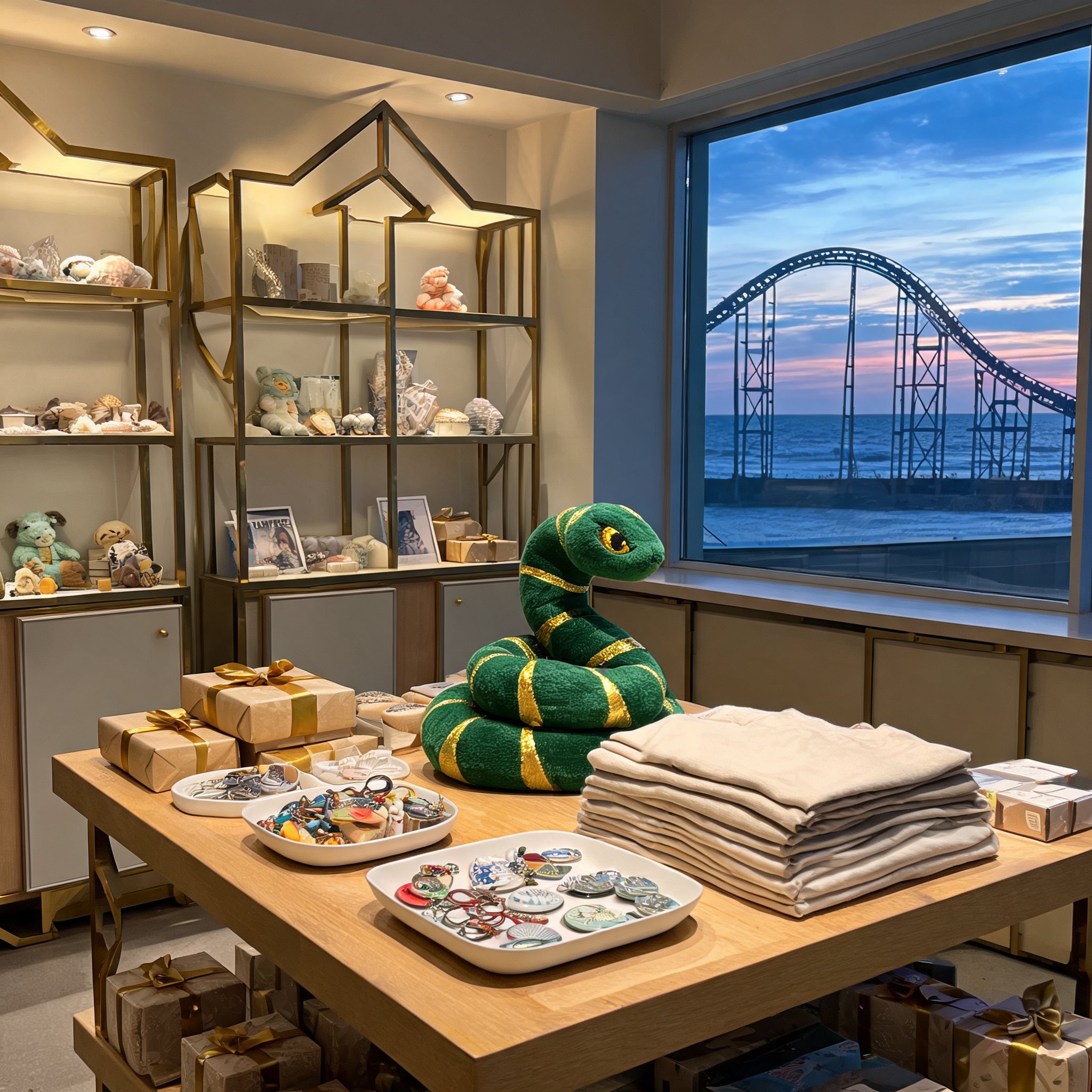
Jackson says every range must have a reason for existing, a clear customer and an authentic connection to the resort; the company does not simply put a logo on a product. Aviktas is his main example. Instead of applying the ride logo to products, the team built the range around the attraction's visual world: a golden snake, emerald colouring, mythology and mystery. Retail was involved early, which Jackson argues is when merchandise is strongest. A run of 50 limited-edition models priced at £250 each sold out. According to Jackson, that shows demand for premium collectables when a product has authenticity, detail and a strong attraction connection. The example is company-provided, not an independent measure of profitability.
One park, many shoppers
Pleasure Beach serves families on a first visit, school groups with limited spending money, teenage friends and couples, international tourists, lifelong fans and serious coaster enthusiasts. Their reasons for buying differ. A family may want a traditional souvenir; an enthusiast may want an accurate collectable tied to a specific attraction; teenagers may respond to confectionery, accessories and trend-led apparel; heritage-minded visitors may value nostalgia, craftsmanship and the resort's stories. Jackson says a single merchandising approach would never be enough. The team combines sales data with time in the shops, staff conversations and guest feedback. Sales reports show what is selling; understanding why requires observation and listening.
That produces a portfolio organised by customer mission, price point and engagement. It includes impulse purchases such as confectionery, magnets, keyrings and badges; practical items such as bottles, bags and ponchos; fashion-led apparel and accessories; children's products and plush; and premium or limited-edition pieces for enthusiasts and collectors. The mix balances attraction-specific merchandise with broader branding, licensed ranges, playful products and heritage collections. The aim is not unlimited choice but an edited range in which every product has a purpose, a target customer and an appropriate price.
Creative development, commercial discipline
Product development begins with Jackson and Amanda Thompson discussing the attraction, its audience and the opportunity. They consider the story, visual identity, emotional impact, fashion relevance and long-term importance within the wider portfolio. Different attractions call for different treatments. ICON lends itself to a clean, contemporary, fashion-led approach; heritage rides such as the Big Dipper and Grand National draw on archive artwork, engineering details, nostalgia and guest memories. Quality and attention to detail cover materials, colours, proportions, trims, embroidery, packaging and in-shop presentation. Commercial fundamentals sit alongside: intended customer, expected demand, price points, production quantities, lead times and sales locations. The final product, Jackson says, must be creatively exciting and distinctive but commercially viable.
Nostalgia has unusual weight at a 130-year-old resort built on family traditions. Pleasure Beach can draw on an archive of attraction imagery, typography, posters, architecture and stories and reinterpret it through contemporary apparel, homeware and collectables. Jackson says the aim is not to feel old-fashioned but to use authentic history in a fresh, desirable way. Playful assets matter too: humour, colour, character and unexpected ideas widen the portfolio and engage children, families and casual visitors. Heritage and playfulness together, he argues, give the park a retail identity broader than ride logos.
Licensing, exclusivity and online competition
Licensed attractions include Nickelodeon and Aardman properties such as Wallace and Gromit. Jackson describes licensing as a partnership among Pleasure Beach, the IP owner and approved suppliers. The park follows brand guidelines and approvals while considering how characters and stories are experienced specifically at Pleasure Beach. In strong partnerships, the licensor protects the brand and the operator explains what visitors respond to and how products work in an attraction environment. To compete with online retailers, Jackson emphasises relevance and exclusivity: exclusive designs, attraction references, location-specific details, personalisation and products that celebrate the visit.
Jackson sees demand shifting toward products that feel exclusive, authentic and considered. He cites growing interest in attraction-specific merchandise, premium apparel, subtle branding, collectables, limited editions and items with a clear story. Guests also want merchandise usable beyond the visit; a hoodie, cap, bottle or bag must work as an attractive product in its own right. Enthusiasts want accurate details, models, technical artwork and products that recognise an attraction's history or engineering. Generic souvenirs and heavily branded products without an additional story have become less compelling, Jackson says, because guests can recognise when a logo has simply been applied. Traditional souvenirs remain important, but design, quality, presentation and relevance must keep evolving.
Operations and the experience layer
Jackson calls stock accuracy and availability the least glamorous and most critical parts of the operation. An outstanding product cannot generate revenue if it is in a stockroom, has not been reordered, is incorrectly priced or is unavailable where guests expect it. The basics include accurate deliveries, stock movement, replenishment, pricing, signage, daily compliance checks and making every unit ready to trade. Clear pricing builds trust, housekeeping makes products desirable, and replenishment prevents missed purchases. Suppliers are treated as partners rather than manufacturers: Pleasure Beach shares the story, ambition and intended customer behind a range and expects reliability in quality, communication, lead times, compliance, pricing and consistency.
To encourage spending, the park starts with products guests want, then uses presentation, location, storytelling, pricing and team confidence. A clear price architecture lets guests enter at different levels, from a small memento to a premium collectable. Trade-up is encouraged by showing additional value through materials, detail, exclusivity, personalisation or a bundle rather than simply a higher price. Product adjacencies matter: a plush character may suggest an outfit; a ride photograph may lead to a frame or multi-photo offer; apparel can be supported by matching accessories and collectables.
Retail as another chapter
Jackson wants retail to feel like another chapter of the day rather than an obligatory exit gift shop. That means considering retail during attraction, event and guest-journey planning. Themed environments, demonstrations, displays, confectionery experiences, personalisation, ride photography and interactive selling can make shopping entertaining. Spaces should reflect their location: a thrill-ride shop should feel different from a children's character store, heritage collection or confectionery outlet. When environment, products and team tell the same story, retail becomes part of the attraction experience. E-commerce extends the relationship year-round, letting enthusiasts follow launches, previous visitors reconnect and distant customers buy selected products; online behaviour also provides demand insight.
Staff are fundamental. Retail colleagues provide energy, product knowledge and personality, demonstrating products, explaining stories and recognising when a guest needs help. Retail can also involve entertainment such as candy floss making, teddy building, bubble demonstrations, photographs or personalisation. Jackson encourages teams to think beyond transactions: they are hosts, storytellers and brand ambassadors, and their feedback can surface requests before formal sales reports. Gift wrapping and personalisation make a purchase feel personal and significant, and support gifting beyond the visit.
What the model depends on
The model is not simply about selling more souvenirs. It links retail to attraction development, segments customers, edits the range, invests in exclusivity and experience, and depends on stock discipline and supplier relationships. Jackson's account also reveals boundaries. Success depends on execution across product, supply chain, staff and space; licensed ranges require approvals; premium collectables need authenticity. The model draws on a 130-year archive and a strong park identity that are not easily copied. The company's examples, including the sold-out £250 models, illustrate its argument but do not prove overall financial performance. The broader lesson is that retail can support the visitor proposition when products have a defined customer and a reason to exist, not merely a logo.