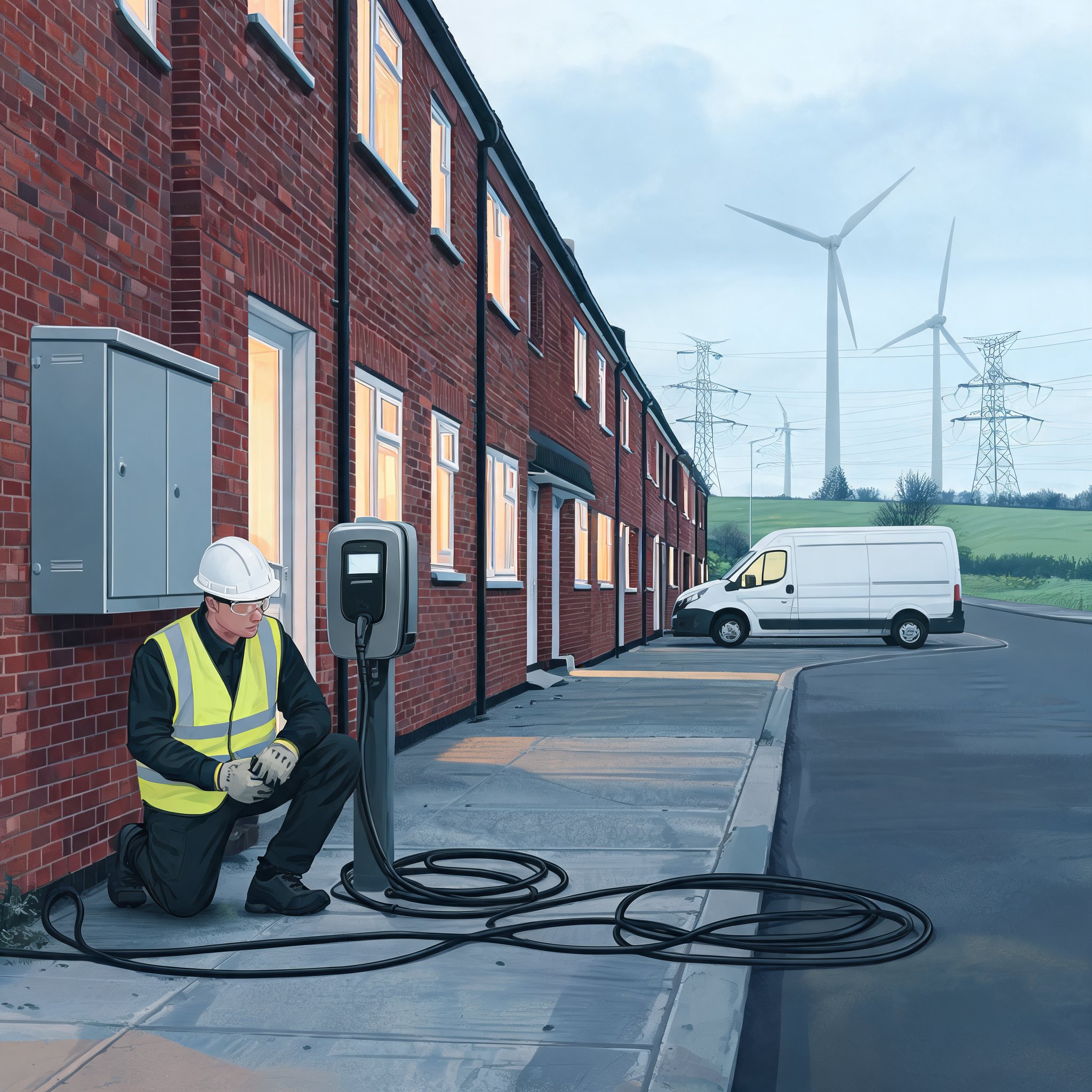
Energy policy took centre stage in the UK Autumn Budget, with Chancellor John Healey announcing bill relief, changes to grid charging and new support for electric vehicle infrastructure. Industry leaders welcomed several measures but said short-term help must be matched by long-term reform, skills investment and faster grid connections.
Household bills and grid connections
Gas standing charges will be scrapped from 2027, or as soon as possible afterwards, Healey said. VAT will be removed from domestic electricity bills until 1 July 2027, and about 20 million households in council tax bands A to D will receive a £100 Household Energy Payment this winter.
The Chancellor also promised cheaper and faster grid connections, while cautioning that it would not happen overnight. Policy costs will no longer be added to bills through levies. A £2 billion Energy Wealth Fund, announced the previous week to channel North Sea revenues into clean energy projects, was confirmed in the Budget.
EV charging and off-street parking
For EV charging, the government will provide £100 million over 2027-28 and 2028-29 to cut prices at existing local, lower-powered public chargepoints. Support begins in spring 2027. A new taskforce will examine whether drivers without off-street parking can use their home electricity tariff at local chargers, following the government-commissioned Cost of Public Electric Vehicle Charging Review published alongside the Budget.
VAT on public charging remains at 20%. The Depot Charging Scheme has reopened with a further £38 million for chargers for electric trucks, vans and coaches.
Oliver Brighton, CFO of chargepoint operator char.gy, said households without driveways rely on street-level charging rather than motorway stops. Councils already know where chargers are needed, he said, but require freedom and long-term funding certainty to move from local plans to installations at scale. He described devolution measures as an opportunity for greater local flexibility and said funding arrangements could help councils commit to neighbourhood-wide programmes with private operators.
Ben Nelmes, CEO of New AutoMotive, said drivers unable to charge at home unfairly pay significantly more for electricity. He welcomed steps to let them use their home tariff at local chargepoints and said the work must move quickly to end the disparity between drivers who can and cannot charge at home.
Simon Smith, CEO of Voltempo, said the depot scheme was welcome but warned that funding chargers without the infrastructure to run them could leave businesses with unusable equipment. He called on the government to support the full cost of making depots electric-ready and to recognise grid connection delays.
Tanya Sinclair, CEO of Electric Vehicles UK, said the Budget addressed immediate household pressure but argued the government could not help motorists with one hand while making the electric transition harder and more expensive with the other. She said public charging remains unnecessarily expensive, particularly for drivers without driveways, and criticised consideration of weakening the ZEV mandate.
Contractor measures and business taxes
For contractors running their own businesses, the main rate first-year allowance on plant and machinery rises from 40% to 50%. Business mileage rates above 10,000 miles rise from 25p to 35p, and the 5p fuel duty cut is extended to July 2027. The National Living Wage will rise by 3.9% to £13.20 an hour from April 2027. The lifetime limit on Business Asset Disposal Relief, used when selling a business, halves from £1 million to £500,000 from April 2027.
Skills, AI and North Sea investment
The Budget also included a £700 million AI package and a commitment to a more business-friendly visa system for high-skilled workers. David Hall, zone president UK and Ireland at Schneider Electric, said energy was rightly central to the Budget because high costs constrain industrial competitiveness and investment. He said removing standing charges, cutting VAT and cheaper EV charging were important, but immediate relief must be matched by long-term reform that lowers the structural cost of energy.
On skills, Hall said delivery of industrial growth, energy reform and infrastructure depends on access to workers able to build, operate and maintain increasingly electrified and connected systems. He welcomed the visa commitment but said it needed targeted investment in further-education colleges, high-quality apprenticeships and flexible retraining.
On AI, Hall said the £700 million package reinforced AI’s role in the UK growth strategy. He cited research finding that 48% of UK industrial leaders see profitability and efficiency as a leading incentive for adopting autonomous technologies, while only 8% have reached full autonomy. Support for AI deployment should sit alongside reliable energy infrastructure and digital-adoption help for smaller firms, he said.
George Morrison, CEO of offshore engineering firm Aquaterra Energy, called for approval of the Rosebank field after the go-ahead for Jackdaw. He said tax policy must support the investment that generates North Sea revenues. The Chancellor said Jackdaw would add an estimated £2.9 billion to the UK economy. Morrison said individual approvals were welcome, but businesses needed visibility of work beyond the next contract to commit to long-term UK investment.