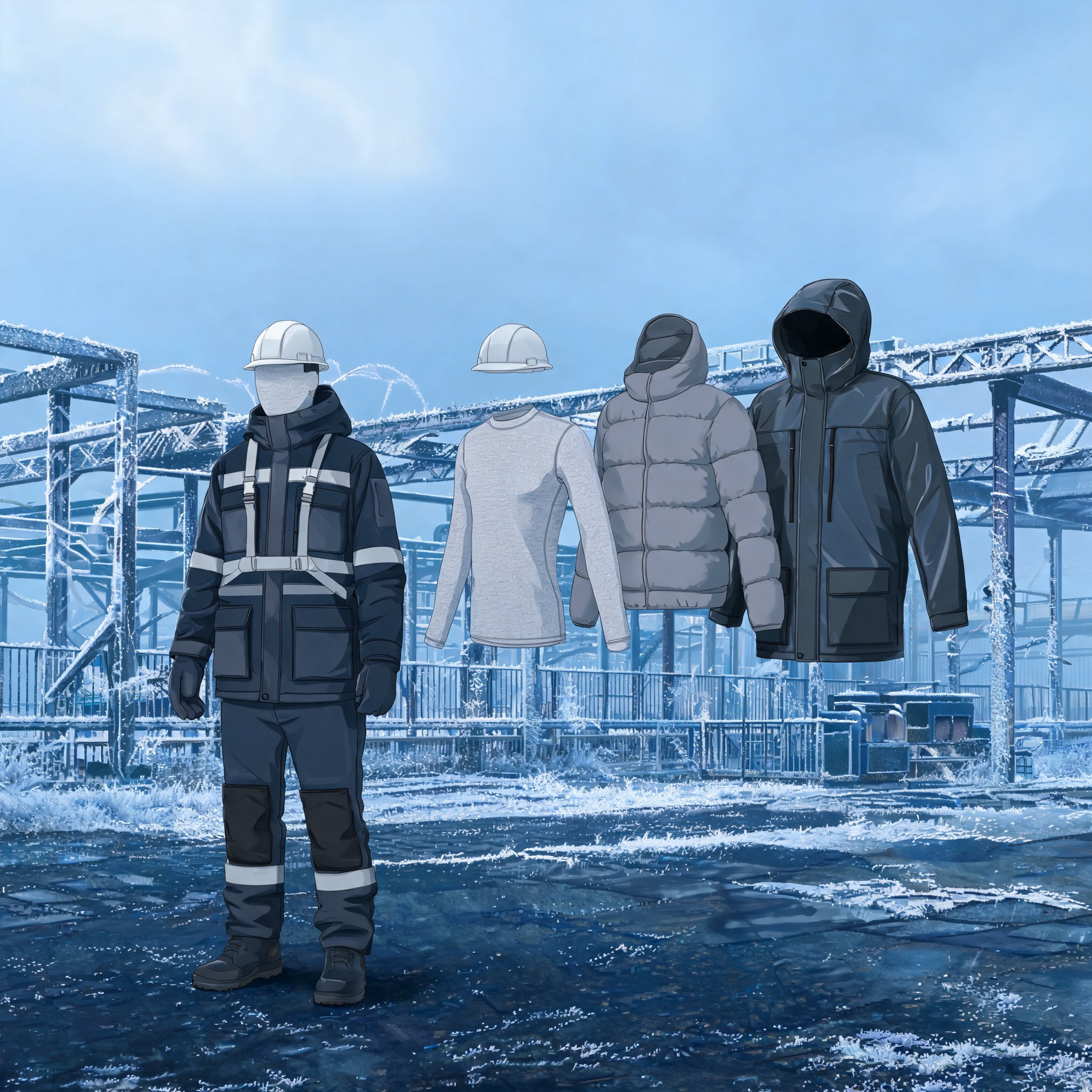
Outdoor assignments in winter increase risks for employees when personal protective equipment is selected or combined incorrectly, according to workwear supplier CWS Workwear International GmbH in Dreieich, Germany. The company says its guidance sets out five typical protection gaps.
Shorter daylight hours, wet conditions and frost change the hazard situation at many outdoor workplaces, yet the protective equipment in use is often not adapted to match. According to the company's current guide, the gaps emerge mainly from the way clothing layers interact with one another.
Certified items, non-compliant combinations
Individual garments may each carry certification, but the combination actually worn can fail to fulfil the requirements of the relevant standards, the guide states. That shifts the focus from single-product conformity towards how the layers perform together in practical use.
The observation is presented as the company's assessment rather than as the result of a published test programme. It nonetheless points to a practical question for employers who issue winter equipment: whether each item is checked in isolation or the assembled outfit is assessed as a system.
CWS Workwear frames the five gaps as a checklist for reviewing winter protective clothing. The guidance does not, in the material summarised here, specify which individual gaps it lists or prescribe particular garment constructions.